Modern solar design starts with the sun—how much sunlight reaches a site, when it arrives, and how consistently it is available across the year. Solar shading analysis quantifies how obstructions reduce that available solar resource over time, turning raw sunlight into defensible energy projections rather than optimistic assumptions.
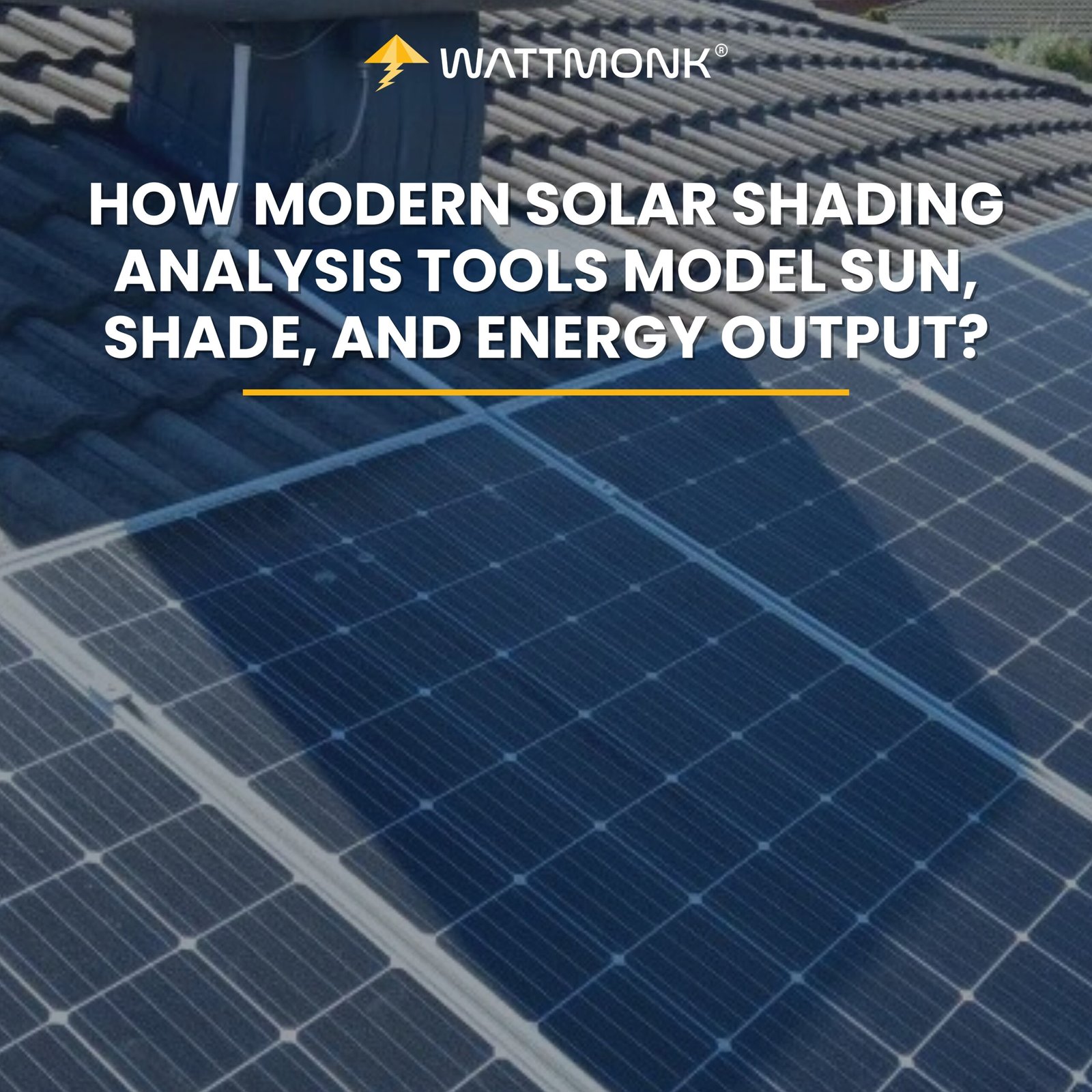
Peer-reviewed research shows that when approximately 20% of a photovoltaic module is shaded, power output can drop disproportionately—by as much as 50% in certain configurations—because shaded cells disrupt current flow across the entire module. This underscores why accurate sun modeling must always account for shading behavior.
Modern solar shading analysis tools model sun path, irradiance, and obstruction geometry together to deliver realistic solar energy production estimates aligned with real operating conditions.
How Solar Shading Analysis Fits Into Sun and Energy Modeling?
Solar shading analysis is not an isolated step—it functions within a broader sun and energy modeling framework. Solar design tools first determine how much sunlight is available to a site by modeling the sun’s position across all 8,760 hours of the year. This sun-path calculation establishes the baseline solar resource that informs solar irradiance and system sizing before any shading losses are applied.
Once sunlight availability is defined, irradiance data is layered onto the model to estimate how much usable energy reaches the array plane. Solar shading analysis is then applied to quantify the impact of shading on solar production, measuring how obstructions reduce available sunlight during specific hours, seasons, and sun angles. Rather than generating a static shade percentage, the analysis modifies time-based solar availability to reflect real operating conditions.
Using solar shading analysis into sun and irradiance models ensures energy simulations account for dynamic losses, resulting in more accurate production forecasts and better-aligned system designs.
Modeling Sunlight Availability: Peak Sun Hours and Seasonal Solar Output
With the role of shading defined in the modeling process, let’s quantify the raw sunlight reaching the site. Accurate energy modeling starts with peak sun hours calculation, which represent the equivalent hours of full solar intensity a location receives each day. This ensures designers have a reliable baseline for expected energy production before considering shading losses.
Seasonal solar output variation further refines these estimates by accounting for changes in day length, sun angles, and weather patterns throughout the year. Integrating these metrics within solar shading analysis, installers can produce realistic solar energy production estimates, optimize array sizing, and plan solar panel orientation and tilt for maximum annual yield, while laying the groundwork for further analysis using SAV, TSRF, and 3D modeling tools.
Translating Sunlight and Shading Into SAV and TSRF Metrics
After calculating sunlight availability, Solar shading analysis translates shading effects into standardized metrics for design and planning. Solar access value (SAV) measures the percentage of sunlight a site receives relative to unobstructed conditions, while total solar resource fraction (TSRF) accounts for cumulative shading losses across all modules and hours. Together, these metrics quantify the impact of shading on solar production, helping installers identify which areas or modules are most affected.
Using SAV and TSRF with 3D layout models and energy simulations, designers can make informed decisions about array placement, solar panel orientation and tilt, and the use of MLPE to mitigate losses. This approach ensures energy estimates remain realistic and aligned with seasonal and daily variations in sunlight.
Using 3D Solar Layout and Shading Tools to Optimize Panel Placement
Modern solar design relies on Solar shading analysis integrated with 3D solar layout and shading tools to create highly accurate models of sunlight exposure across a site. These platforms simulate the sun’s movement for every hour and day of the year, factoring in seasonal angles, roof geometry, and surrounding obstructions such as trees, chimneys, vents, and neighboring buildings.
Visualizing shading patterns in 3D, installers can identify which modules and strings are most affected and make shading and panel placement optimization decisions before construction begins. Designers can adjust array layout, tilt, orientation, and spacing to ensure each module captures the maximum available sunlight, improving optimizing solar energy capture across the system.
Advanced solar design tools for shading analysis also provide module-level insights. Users can evaluate the benefits of MLPE (module-level power electronics) devices, microinverters, or string reconfiguration for mitigating shading losses, producing realistic solar energy production estimates for client proposals and financial models.
Combining 3D modeling with solar shading analysis allows installers to reduce redesigns, avoid over- or under-sizing, and document shading considerations for permitting, plan sets, and client communication. This creates a design process that is both technically precise and financially reliable.
Validating Solar Shading Models With On-Site Assessment
While digital 3D models provide powerful insights, solar shading analysis is most effective when validated in the field. Advanced solar site assessment ensures that simulated shading patterns match real-world conditions, capturing temporary obstructions, minor roof irregularities, and microclimate effects that software alone cannot detect.
Digital tools simulate peak sun hours calculation and account for seasonal solar output variation, producing realistic solar energy production estimates. On-site measurements, using instruments like SunEye, lidar, or drone surveys, confirm roof geometry, module heights, azimuths, and horizon profiles. This verification ensures that shading losses predicted in the software reflect actual site conditions.
Combining modeling and field data enables installers to optimize solar panel orientation and tilt, array layout, and string configuration while minimizing production losses. This integrated workflow supports precise permitting documentation, improves client confidence, and reduces costly redesigns.
Parting Thought
Accurate solar shading analysis is essential for designing solar systems that deliver predictable energy output and client value. Metrics like SAV and TSRF, 3D solar layout and shading tools, and advanced solar site assessment, installers can identify shading risks, optimize solar panel orientation and tilt, and make informed design decisions.
This approach minimizes redesigns, improves permitting accuracy, and ensures that energy projections match real-world performance. Installers who prioritize shading analysis not only maximize system efficiency and energy capture but also build trust with clients by providing realistic solar energy production estimates.
Investing time in thorough shading evaluation turns potential shading challenges into actionable opportunities for smarter solar design.