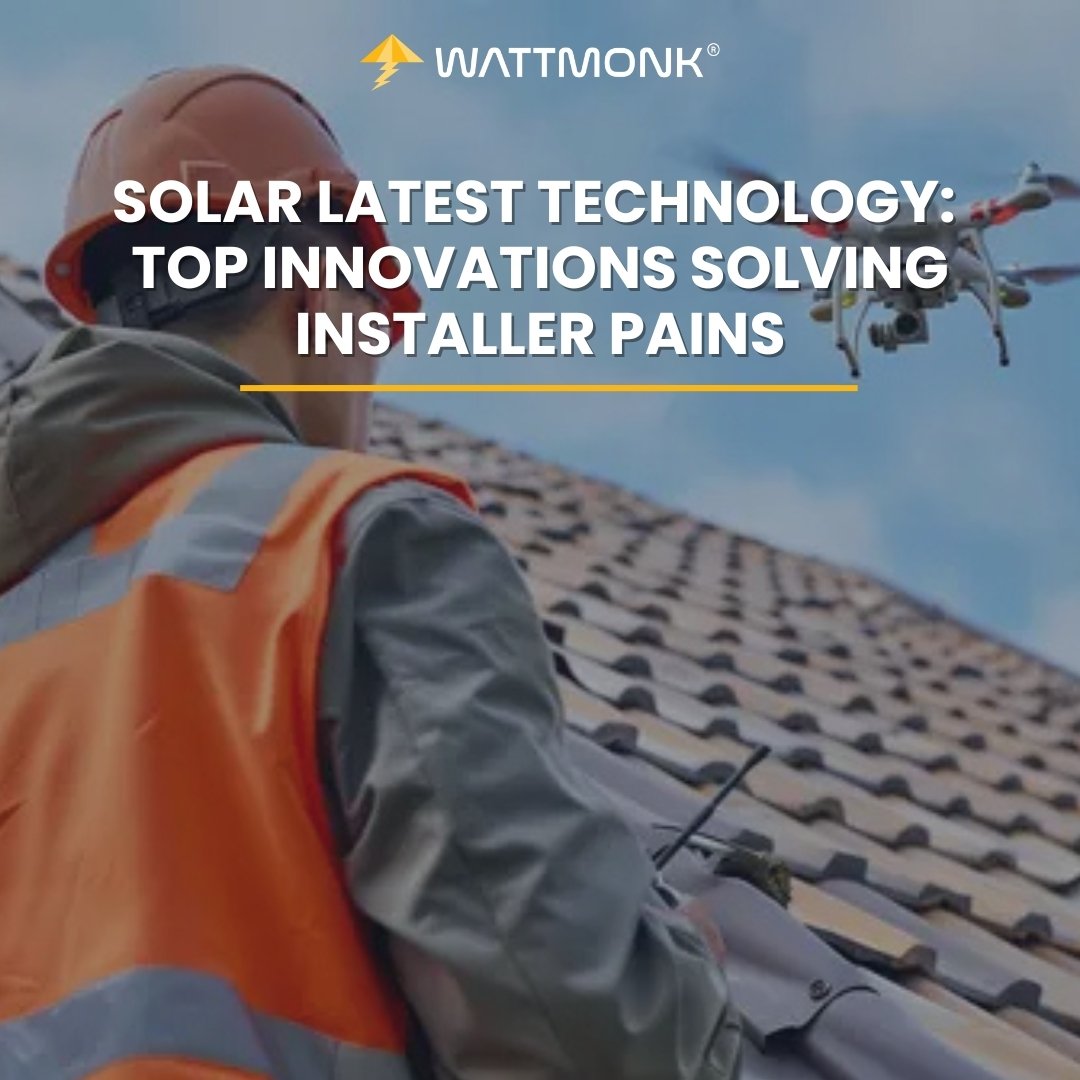
The drive for greater efficiency and lower costs continues to redefine solar energy in 2026. Breakthroughs across solar latest technology are not just theoretical; they are reshaping practical applications, offering significant advantages for installers. From enhanced cell performance to innovative module designs, these advancements directly address the industry’s need for higher energy yields and reduced installation complexities.
Understanding these crucial shifts helps professionals leverage cutting-edge equipment for maximum project profitability and customer satisfaction. The focus on integrating these innovations into daily workflows is paramount, ensuring optimal project outcomes and streamlined operations.
Latest Advancements in Solar Cell Technology
The core of any high-performing solar system lies in its photovoltaic cells, and remarkable leaps in their performance and cost-effectiveness can be seen today. Installers are increasingly turning to advanced cell architectures that promise higher energy yields and greater durability.
Here are the latest advancements in solar cell technology making a significant impact:
1. N-Type Technologies (TOPCon & HJT)
Tunnel Oxide Passivated Contact (TOPCon) and Heterojunction Technology (HJT) are rapidly becoming industry benchmarks. These N-type cells offer superior temperature coefficients, minimizing power loss in hot climates, and boast lower degradation rates over a system’s lifetime compared to traditional P-type cells. The widespread adoption of this solar latest technology means higher overall energy production and longer system warranties for customers, enhancing project profitability.
2. Silicon-Perovskite Tandem Cells
This innovative solar latest technology stacks a perovskite layer on top of a traditional silicon cell. Perovskites efficiently absorb high-energy blue light, while silicon captures red and infrared. This combination allows for a much broader spectrum of sunlight absorption, pushing laboratory efficiencies well over 30% in 2025. While large-scale commercialization is still evolving, these breakthroughs promise significantly more power from smaller module footprints in the near future.
3. Interdigitated Back Contact (IBC) Cells
Interdigitated Back Contact (IBC) cells move all electrical contacts to the rear of the cell. This design eliminates shading from front-side metal lines, allowing the entire front surface to absorb sunlight. For installers, this means very high efficiencies and a sleek, all-black aesthetic, making them ideal for premium installations where visual appeal and maximum power density are crucial.
Leveraging this solar latest technology, installers are equipped to offer more powerful and reliable solar solutions, optimizing energy harvest from every installation.
AI-Powered System Design and Production Forecasting
The efficiency gains from advanced solar cells are complemented by intelligent system design. Manual processes, previously time-consuming and error-prone, are revolutionized by Artificial Intelligence (AI) and Machine Learning (ML). In 2026, this innovative solar latest technology optimizes project development from concept to long-term performance, significantly cutting soft costs and accelerating deployment.
Automated Design & Optimization
AI algorithms process vast datasets—satellite imagery, LiDAR, and 3D models—to generate optimized solar layouts. Systems identify ideal panel placement, account for shading, and simulate seasonal changes in energy capture. This precision cuts design time, enabling installers to finalize proposals in minutes.
For more insights, see AI’s impact on solar design.
Enhanced Production Forecasting
AI and ML also transform energy production forecasting. By analyzing historical weather, local climate, and real-time conditions, algorithms provide accurate performance predictions. This ensures reliable financial modeling and stronger guarantees, with yields matching actual output.
Streamlined Project Workflows
AI’s integration across design and forecasting tools creates efficient project workflows. This solar latest technology generates precise documentation rapidly. Platforms like WattMonk, for instance, streamline accurate Solar Sales Proposals and Plan Sets with the help of tools like Zippy. This empowers installers to manage Permitting and Engineering Review with greater efficiency.
How Technology Transforms Solar Proposal Generation
The transition from a potential lead to a confirmed customer is significantly influenced by the quality and speed of solar proposals. Gone are the days of generic, time-consuming documents.
Accelerated, AI-Powered Creation: Modern platforms leverage AI to generate highly customized proposals almost instantly. These systems integrate detailed insights from advanced design and forecasting tools, ensuring every proposal is precise and reflects the most current system optimization
Dynamic Visualizations & Accuracy: Thanks to solar latest technology, integrated with AI, sale proposals now feature interactive 3D site models and meticulous panel layouts. This allows clients to clearly visualize their future solar array, addressing potential shading issues and aesthetic concerns with unparalleled clarity, directly enhancing confidence in the proposed solution.
Integrated Financial Clarity: Comprehensive financial analyses, including projected energy savings, Return on Investment (ROI), and various financing options, are seamlessly embedded. This provides clients with a transparent and detailed understanding of their investment, reinforcing value propositions.
Rapid Turnaround & Efficiency: This solar latest technology dramatically reduces the time spent on proposal creation.
Foundation for Project Progression: Beyond securing the sale, these sophisticated proposals serve as a critical foundation for subsequent project phases
Faster, More Accurate Plan Sets with Advanced Tools
After proposal acceptance, precise plan sets for permitting and installation are a bottleneck. Here’s how modern advancements streamline solar designs:
Automated CAD & Design: AI/machine learning auto-generate schematics and layouts, reducing drafting errors and accelerating design.
AI-Powered Compliance: Integrated systems cross-reference designs with local codes, utility rules, and NEC. Proactive flagging with help of platforms like Solar Agent Hub, prevents delays, costly reworks/ resubmissions and ensuring compliance.
Real-time Collaboration: Cloud-based platforms enable seamless engineer teamwork, reviewing/revising plan sets instantly. This accelerates approval cycles for efficient permitting.
Integrated 3D Modeling: High-resolution 3D models from site surveys provide precise measurements for panel placement, shading, and conduit, critical for site survey.
Data-Driven Efficiency: Automating tasks and enforcing compliance minimizes reworks. This solar latest technology improves accuracy, reduces costs, and speeds timelines.
Last Thought
The solar landscape is now thriving on innovation. From intelligent design to precise execution, these advancements reduce soft costs and scale businesses efficiently. To harness this evolution, WattMonk is a partner you need to seamlessly integrate cutting-edge solar advancements into your project lifecycle. We provide unparalleled accuracy for Solar Sales Proposal, meticulous site survey, precise plan set creation, comprehensive engineering review, permitting, and PTO & Interconnection processes.
WattMonk helps optimize projects for performance, compliance, and profitability.
Future-proof your operations in this dynamic market with us.