
Solar adoption among U.S. homeowners continues to grow, with more than 4.7 million homes across the country equipped with rooftop solar systems in early 2025, according to industry data. That number reflects a significant increase from previous years and highlights how solar is moving beyond early adopters into broader homeowner interest.
As solar technology evolves, homeowners now face a choice: stick with traditional rooftop solar panels or consider integrated solar roofing systems—sometimes called solar shingles or photovoltaic roofs. These options differ in how they generate electricity, how they’re installed, and how they fit into the overall design and performance of your house.
This guide breaks down the real differences between these systems, focusing on efficiency, durability, cost, installation, and permitting so you can decide which option makes more sense for your home and budget.
Solar Roofs vs Solar Panels: What’s the Real Difference?
On the surface both solar roofs and solar panels do the same job: convert sunlight into electricity for your home. The difference lies in how they sit on your roof and how much flexibility they have in design, performance, and future maintenance.
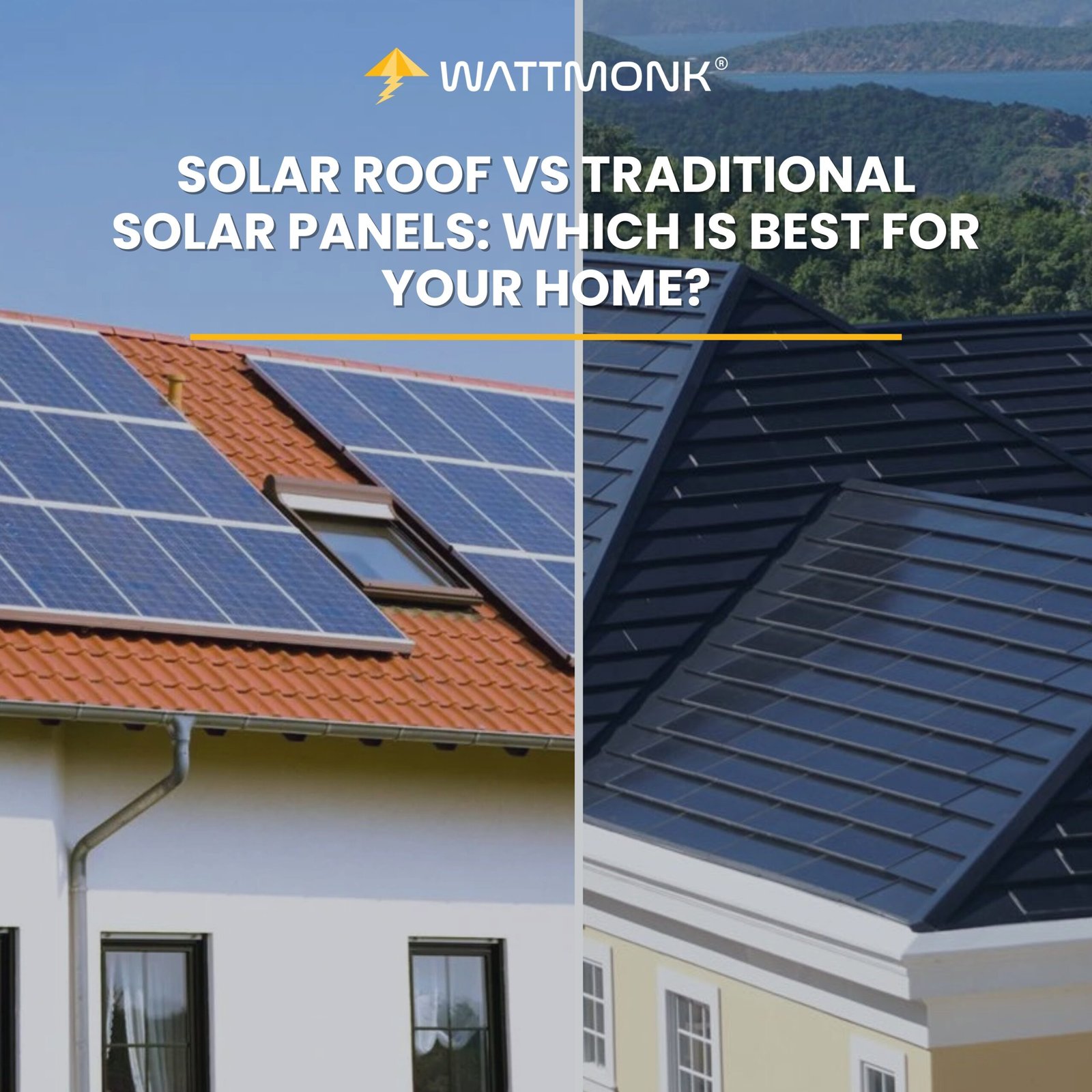
Traditional solar panels, like SunPower or LG, are mounted on top of an existing roof using racking systems, leaving the roof itself intact. The roof itself remains unchanged, while panels are positioned above it at angles optimized for sunlight exposure. Solar roof systems, on the other hand, replace portions of your roofing material with photovoltaic tiles or shingles. Tesla Solar Roof and similar integrated systems replace roofing material with photovoltaic tiles, making the roof and solar system a single structure.
This structural difference affects everything that follows, from performance and maintenance to installation complexity and permitting.
Efficiency and Performance Differences
Traditional solar panels generally offer higher efficiency per panel because they are raised above the roof and can be positioned for optimal airflow and sun exposure. Solar shingles tend to be less efficient individually, but they cover more surface area, which can partially offset that gap.
Performance also depends heavily on roof orientation, shading, and usable space. With integrated solar roofs, layout flexibility is more limited, making accurate design and planning especially important to avoid underperforming sections.
Durability, Lifespan, and Maintenance
Most traditional solar panels are rated to last 25 to 30 years and can often be serviced or replaced without disturbing the roof. Solar roof systems are built to function as roofing material, which means they are designed to withstand weather and impact but can be more complex to repair. Replacing a damaged section may involve both roofing and electrical work, making long-term maintenance an important consideration for homeowners.
Solar Roofs vs Solar Panels: Benefits
Both systems offer clear advantages, but they solve different homeowner needs. Here’s how the benefits break down.
Benefits of Solar Roof Systems
Seamless appearance: Solar shingles sit flush with the roof, creating a uniform look that blends into the home’s design.
Dual-purpose installation: Acts as both roofing material and energy system, which can be practical during a full roof replacement.
HOA-friendly option: Less visible hardware can help meet neighborhood or architectural guidelines.
Integrated design: Fewer exposed mounting components compared to panel systems.
Benefits of Traditional Solar Panels
Higher layout flexibility: Panels can be installed only on roof sections with the best sun exposure.
Stronger performance potential: Elevated mounting allows better airflow and optimal tilt angles.
Easier maintenance: Individual panels can typically be serviced or replaced without disturbing the roof.
Future expandability: Systems can be upgraded or expanded if energy needs increase.
Cost Comparison Between Solar Roofs & Panels
Cost differences between solar roofs and traditional solar panels extend beyond the price of the equipment itself. For most homeowners, the total investment is shaped by installation complexity, roof condition, and long-term ownership considerations.
Upfront Cost Differences
Traditional solar panels from manufacturers such as SunPower are typically more affordable upfront because they are installed on top of an existing roof. Solar roof systems, including options like Tesla Solar Roof, replace standard roofing materials with photovoltaic components. This increases both material and labor costs, making integrated solar roofs one of the more expensive residential solar options at the point of purchase.
Installation and Labor Costs
Installing traditional panel systems is usually faster and less labor-intensive, often completed in a matter of days. Panel installations from established brands follow a familiar process for most installers. Solar roof installations, such as Tesla Solar Roof, take longer because roofing and electrical work must be coordinated, increasing labor time and overall project complexity.
Maintenance and Long-Term Value
Solar panels are easier to service or replace individually, keeping maintenance costs relatively predictable. Solar roofs can be more costly to repair, but may make financial sense when paired with a planned roof replacement. For most homeowners, traditional panels still offer a quicker return on investment due to lower upfront costs.
Installation, Layout, and Roof Design Considerations
How a solar system is installed—and how it fits on your roof—can have a major impact on both performance and long-term satisfaction. The differences between solar roofs and traditional solar panels become especially clear during the design and layout phase.
Installation Timeline and Disruption
Solar panels are typically installed on top of an existing roof using mounting hardware. This approach allows installers to work around roof features and usually keeps installation time relatively short. Solar roof systems require removing existing roofing materials and replacing them with photovoltaic components, which extends project timelines and increases disruption during installation.
Roof Layout and Design Flexibility
Solar panels offer greater flexibility in layout. Panels can be positioned only on roof sections with the best sun exposure, while shaded or low-performing areas can be avoided. Solar roof systems distribute photovoltaic material across the roof surface, which can limit optimization in homes with complex roof shapes or multiple obstructions.
Impact of Roof Features
Vents, chimneys, skylights, and roof pitch all affect usable solar space. With solar roofs, these features can reduce efficiency more noticeably because the system is integrated into the roof itself. Accurate roof measurements and layout planning are critical to avoid underperforming areas and design revisions.
Permitting and Code Approval Factors
Permitting is an often-overlooked part of going solar, but it can significantly influence timelines and costs. The type of system you choose plays a role in how closely your project is reviewed by local authorities.
Why Solar Roofs Often Face More Scrutiny?
Solar roof systems are treated as both a roofing product and an electrical system. Because they replace traditional roofing materials, building departments and AHJs often require more detailed documentation to verify structural integrity, fire safety, and code compliance. This can lead to additional review steps compared to standard panel installations.
Fire Codes and Roof Access Requirements
U.S. fire codes typically require clear roof access pathways for first responders. Traditional solar panels are easier to position around these setback requirements. With solar roofs, meeting fire access rules can be more challenging, especially on smaller or more complex roof designs, making precise layout planning essential.
Plan Sets and Documentation Expectations
Permitting authorities often expect more detailed plan sets for integrated solar roofs, including roof cross-sections, electrical diagrams, and material specifications. Inaccurate measurements or incomplete layouts can lead to revision requests and approval delays, regardless of which system is chosen.
Which Is the Best Solar Roof Option for Homes?
Choosing between a solar roof and traditional solar panels depends on your priorities, roof condition, and budget. Both options provide clean, renewable energy, but they serve different needs. For homes with a roof in good condition, traditional solar panels are often the most practical choice.
They allow flexible layouts, higher efficiency per panel, and easier maintenance, making them ideal for retrofits. Solar roofs, on the other hand, are most effective when a full roof replacement is planned or when visual integration is a top priority. While installation costs and permitting requirements may be higher, integrated shingles combine roofing and energy generation in a single project, simplifying long-term planning.
Ultimately, the right choice depends on your roof’s age and structure, desired energy output, aesthetic goals, and budget, with careful layout and permitting planning ensuring reliable, long-term performance.
