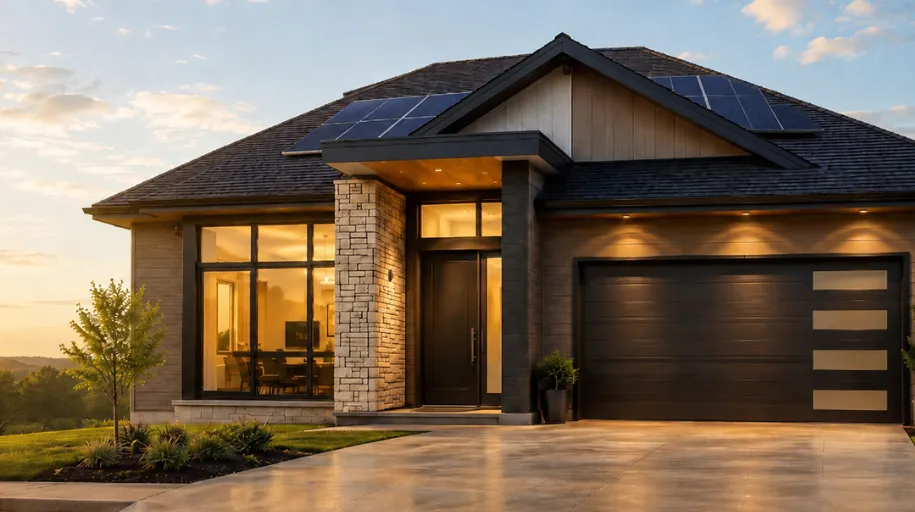
Residential Solar Permit Package Built for DIY Homeowners



15,000+
Homeowner Projects Supported

500+
Utility Jurisdictions

46+
States

48 hrs
Surveyor Dispatch
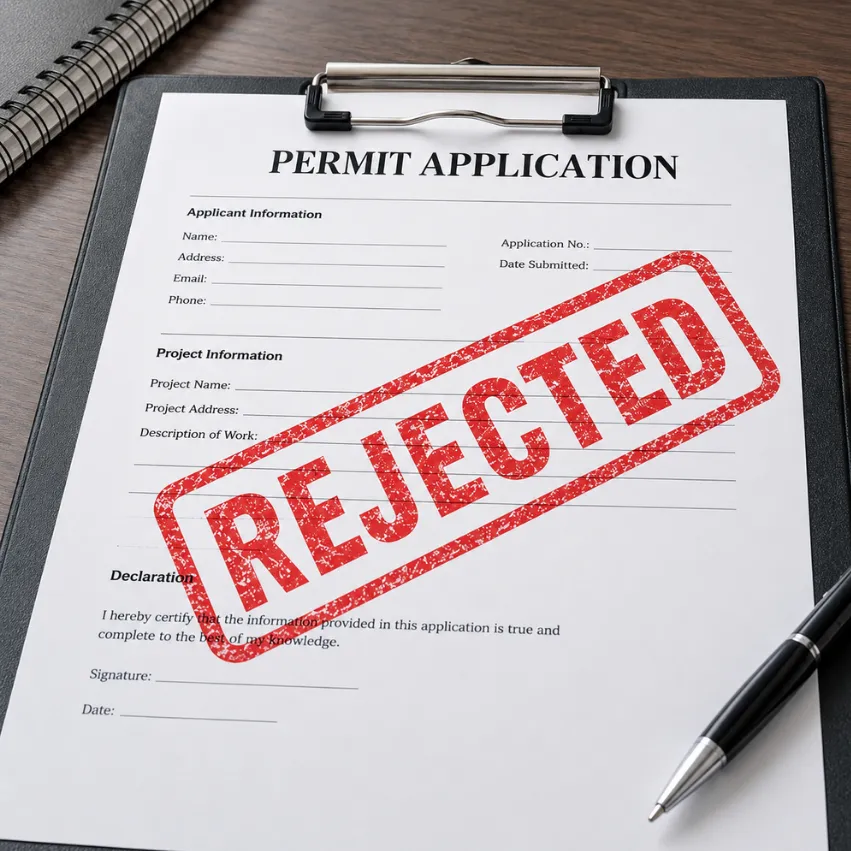
Why Residential Solar Permits Get Rejected & How to Avoid It
Between signing off on equipment and actually turning the system on, there's a stack of documentation your local building department won't move without. Most homeowners don't find out what's missing until a permit gets rejected.

Every city and county sets its own permit requirements. What cleared in the next town over won't necessarily be clear for your address. Submitting a generic plan set is the fastest way to earn a correction letter.

Most jurisdictions require a licensed engineer to sign off on your structural and electrical plans before the permit office will accept them. That's not a formality — it's a hard gate.

Getting your system permitted and getting it connected to the grid are two different processes. PTO (Permission to Operate) requires its own application, through your specific utility, before your system can legally run.
DESIGN & ENGINEERING
Residential Solar Design & Engineering Capabilities

RESIDENTIAL SERVICES
Our Residential Solar Services For Homeowners
You bring the site. We build everything the permit office, the engineer, and the utility need to see.

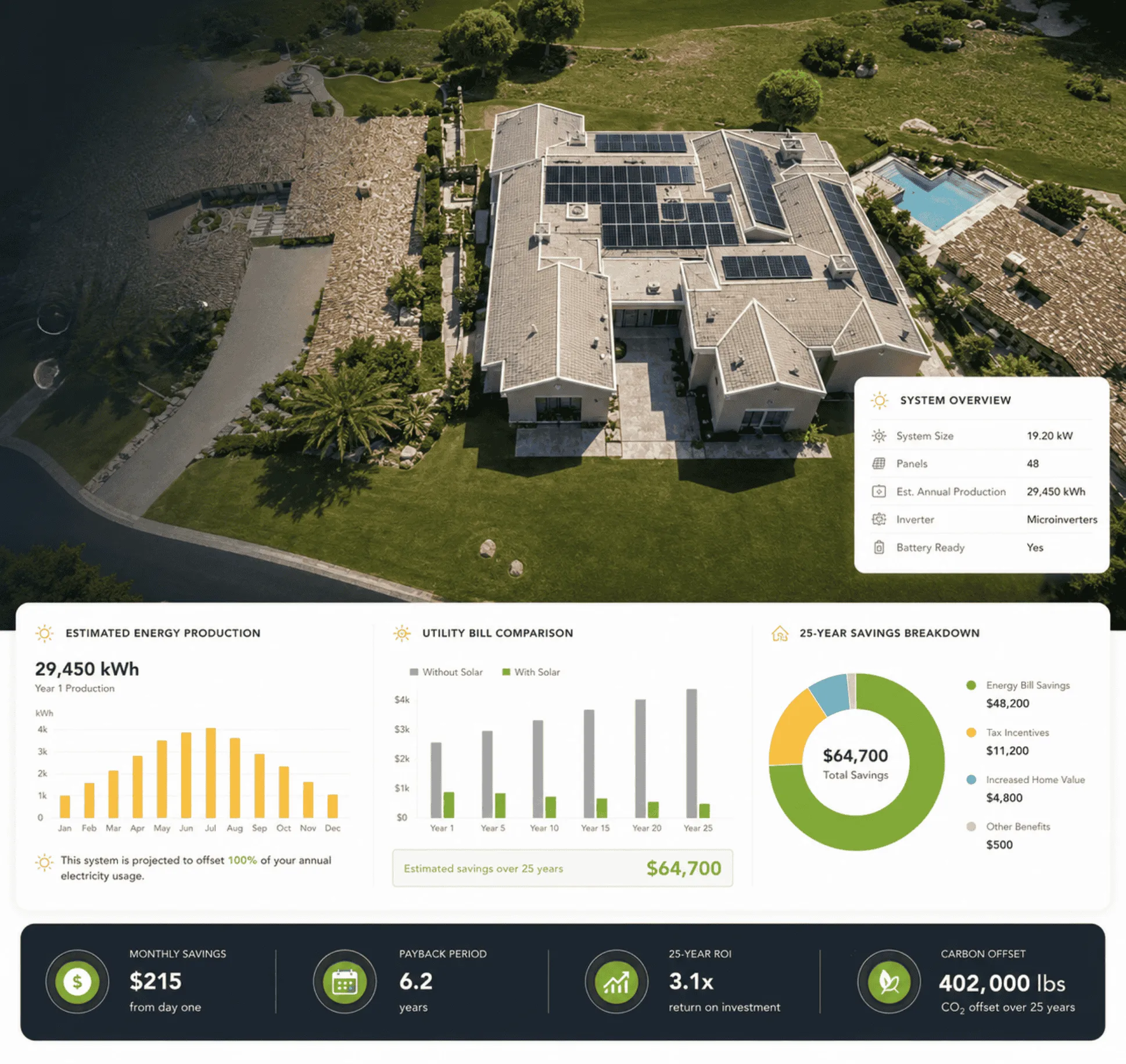
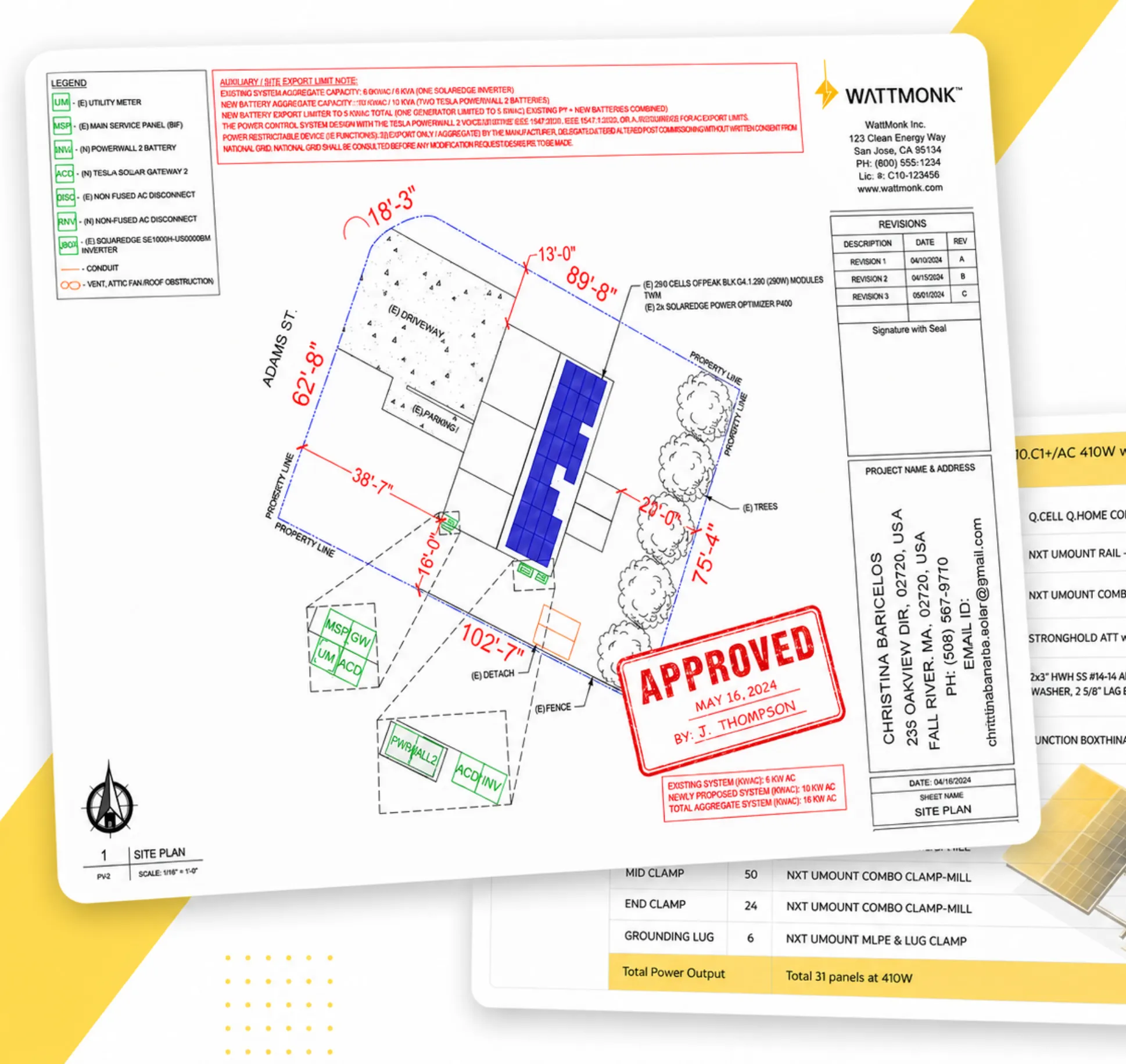
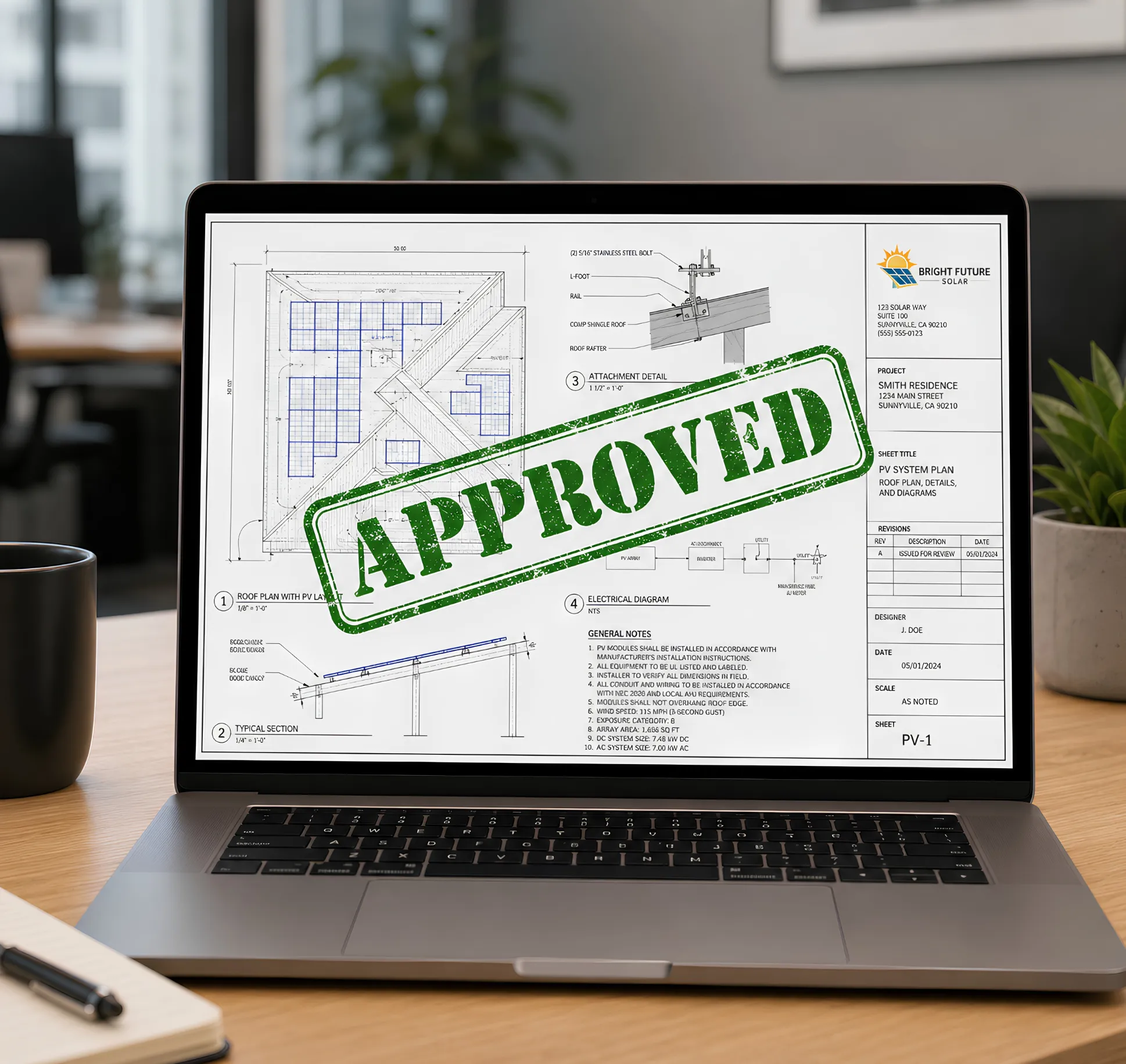
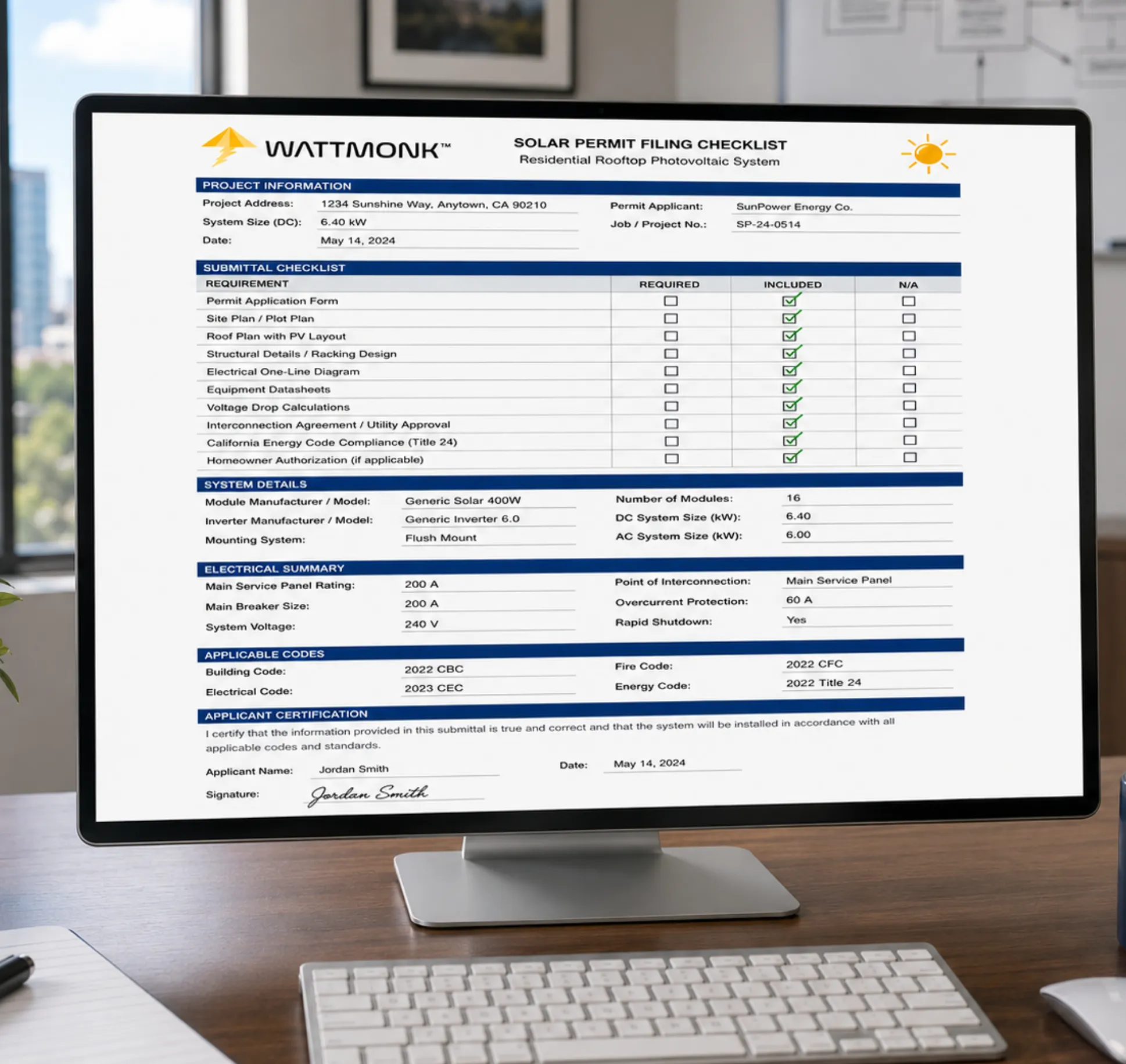



Solar Designs Built for Code, Safety & Long-Term Performance
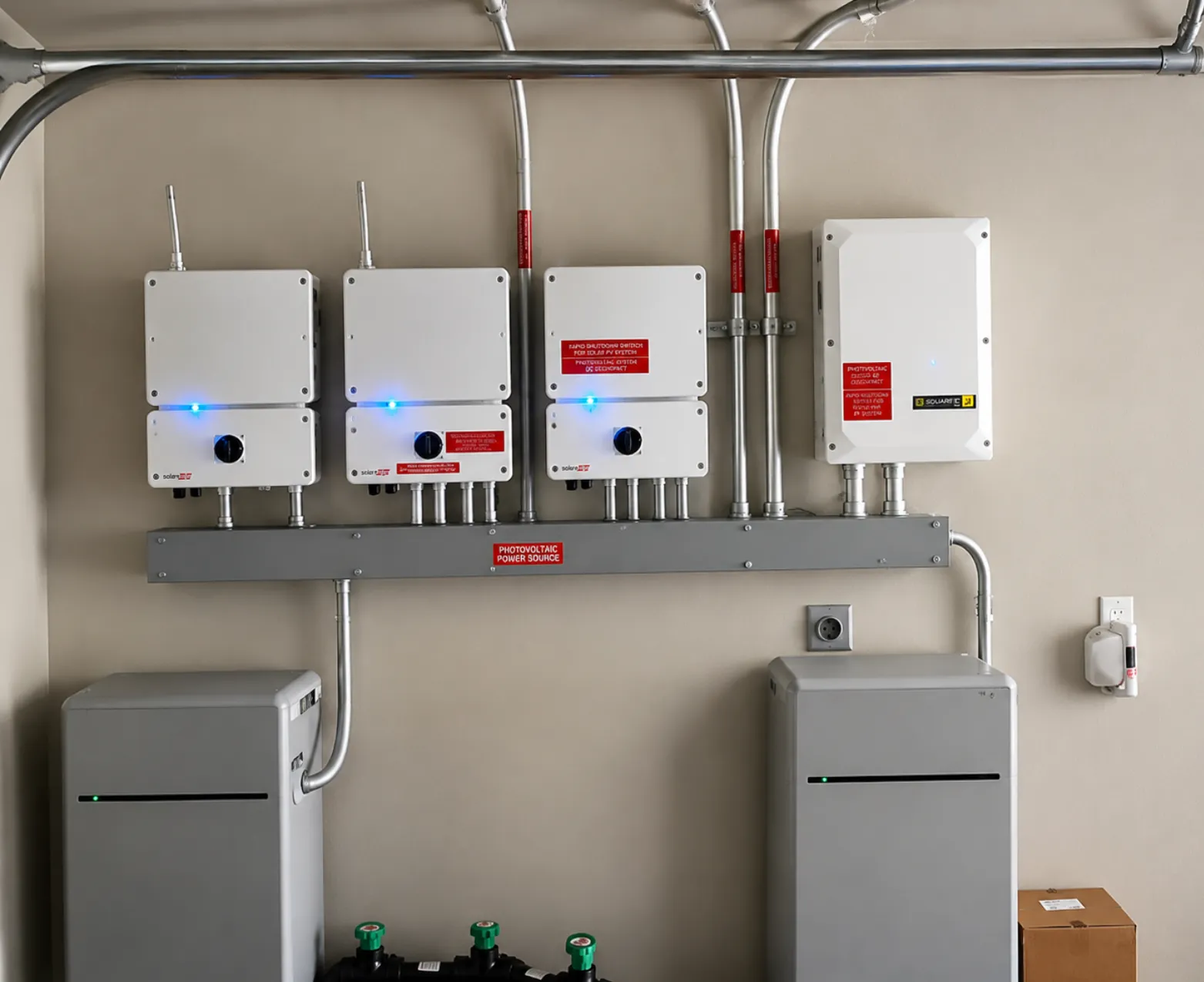
Every residential solar system WattMonk engineers is built to exceed compliance standards - not just pass inspection. We design with the full system lifecycle in mind, so your installation is safe, durable, and hassle-free for decades.

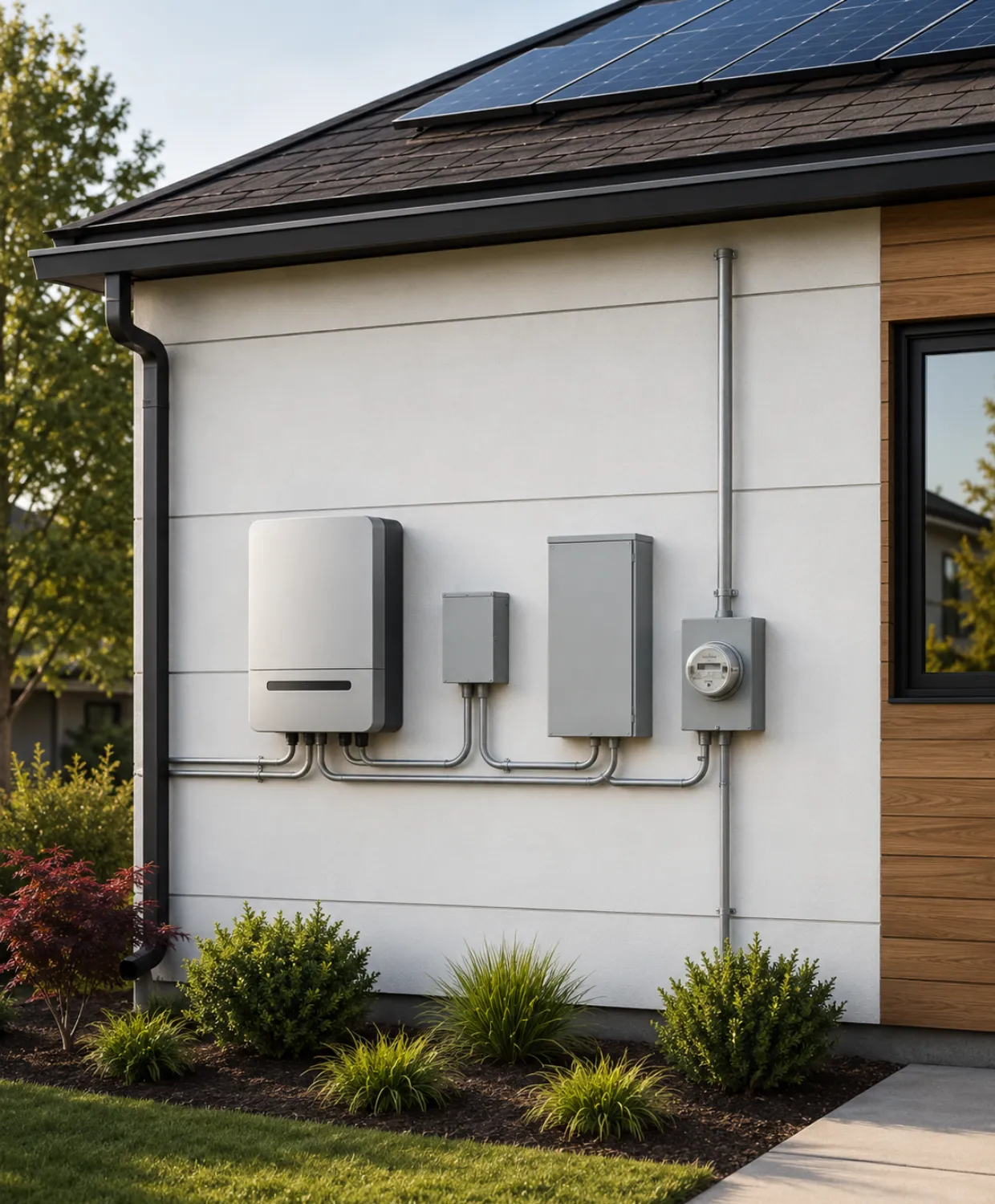


Our Solar Engineering Process for Homeowners
Tell Us About Your Project
Share your address, your system size, and what you've already chosen. We'll scope what you need from there.
We Survey Your Site
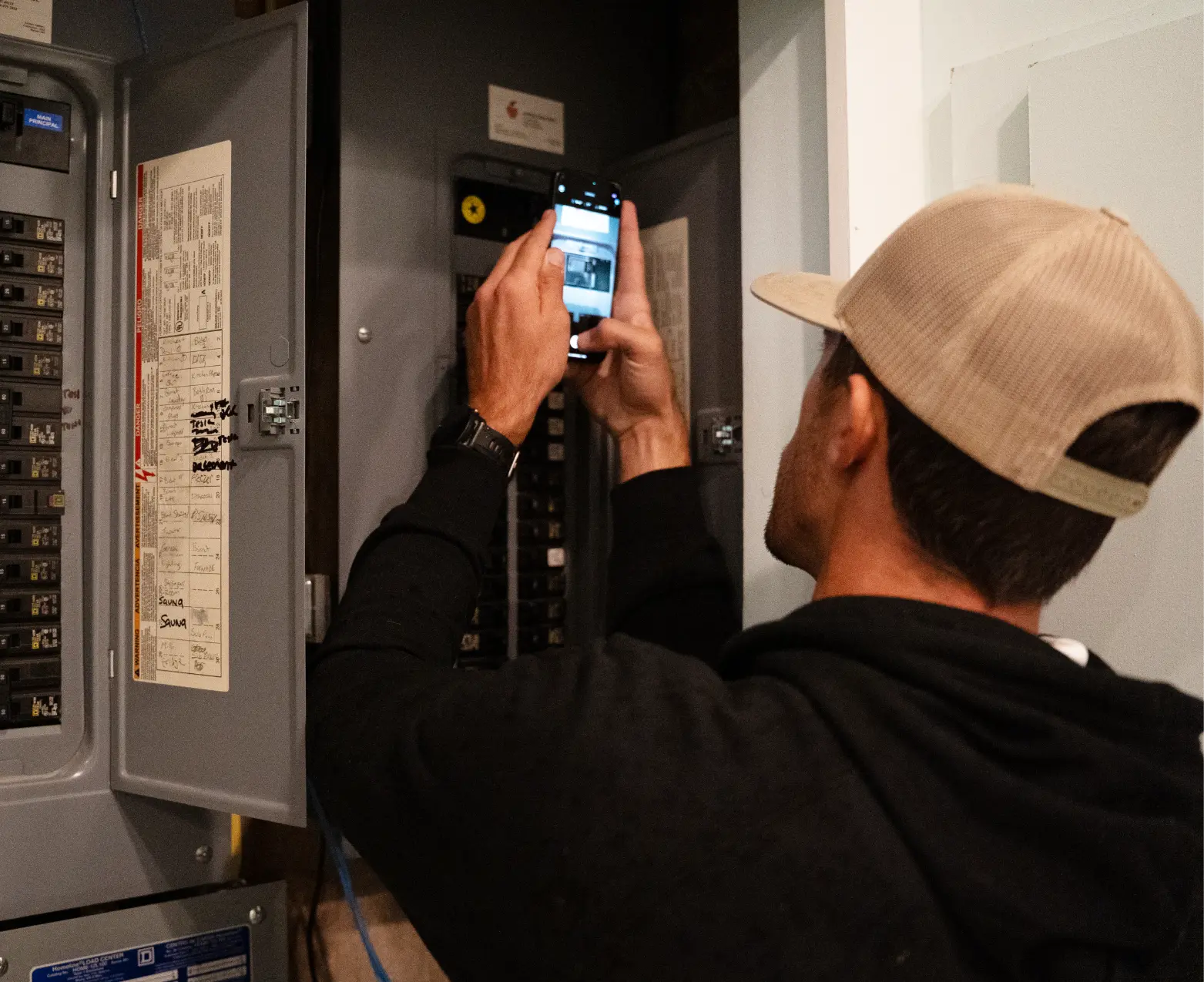
A technician visits your property, captures roof dimensions, evaluates your electrical panel, and flags anything the design team needs to know. Back to you in under 48 hours.
We Build Your Permit Package
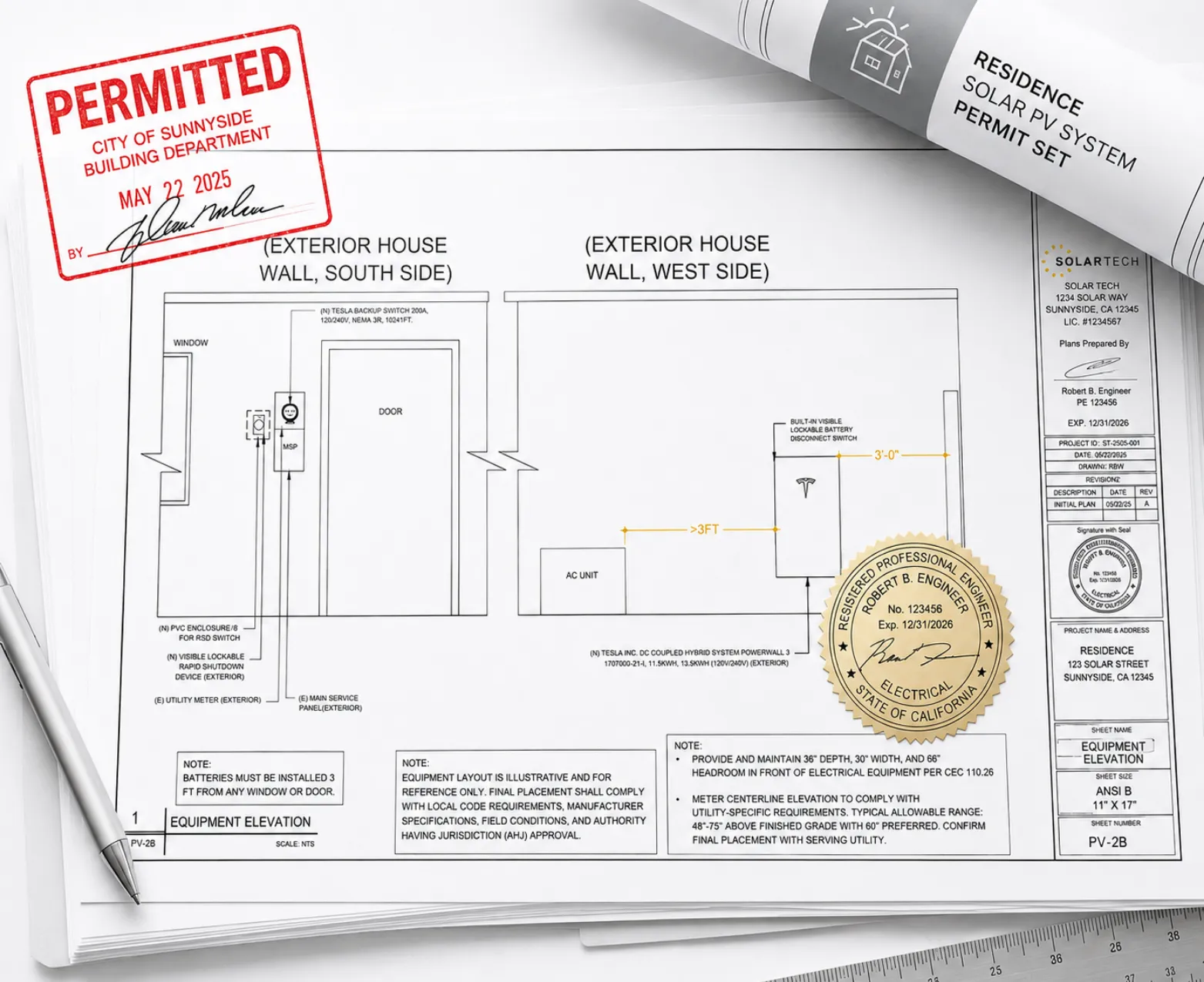
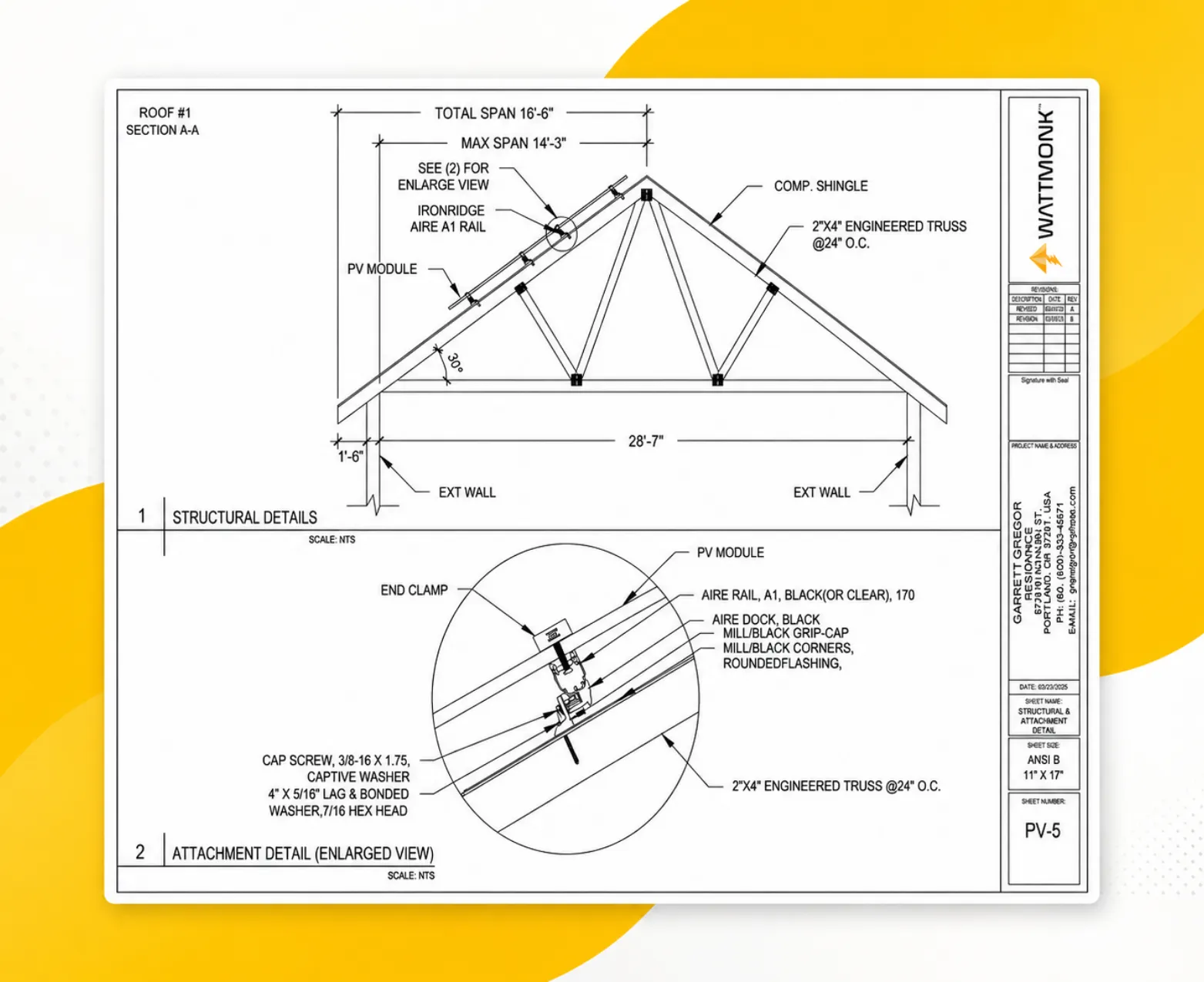
Our engineering team designs your system to your AHJ's exact requirements — plan set, calculations, SLDs, and equipment documentation, run through PlanSetIQ's AI-verified QC before it leaves our desk.
A Licensed PE Reviews and Stamps
A licensed engineer in your state reviews the plans for structural and electrical compliance and applies their professional stamp. This is what most building departments require before they'll open a permit.
We File With Your Building Department
We submit the permit package through the right channel for your jurisdiction — online portal, in-person counter, or mail depending on your AHJ. We track it and handle any correction requests.
We File for PTO With Your Utility
After your inspection clears, we submit your interconnection application and manage the utility coordination through Permission to Operate. Your system is fully live when this comes through.
Your Plan Set Gets Checked Before It Goes Anywhere

A rejected permit isn't just frustrating — it adds weeks to your project and sometimes requires redesign fees. Every Wattmonk plan set runs through a QC process before submission, not after.

Jurisdiction-Specific
Your plan set is built against the requirements of the authority reviewing your project. That means your county's setback rules, your utility's interconnection standards, and your state's NEC amendments are all factored in before the plans leave our desk.
AI-Verified Before Engineer Review
Before a human reviewer checks your plans, PlanSetIQ — our solar design drafting tool trained on 125,000+ approved submissions runs a compliance check against your specific AHJ. It flags anything that doesn't match before it becomes your problem.
90% First-Submission Clearance Rate
Our plan sets are approved on first submission. When a correction comes back from the AHJ, we handle the revision without you having to start over.
Why Homeowners Choose Wattmonk
Thousands of residential solar projects across the USA trust WattMonk for one reason — accuracy. From AHJ-compliant plan sets to PE-stamped engineering reviews, we make sure your solar approval goes through right the first time.

Residential Solar Expertise

Permit-Ready Deliverables

Engineering Support

Utility Approval Guidance
Streamlined Approval Workflows
End-to-End Documentation Support
WHAT HOMEOWNERS SAY
Real Projects, Real Approvals
I had no idea my county required a separate structural stamp from a state-licensed engineer. Wattmonk flagged it before we even submitted — saved me at least three weeks.

Jake
Houston, Texas
I tried submitting myself and got rejected twice. Wattmonk's team built the package from scratch and it cleared the first time.

Maya
Dallas
The whole process took about two weeks from the site visit to permit approval. Way faster than I expected going in.

Jennie
Tampa Bay, Florida
I had no idea my county required a separate structural stamp from a state-licensed engineer. Wattmonk flagged it before we even submitted — saved me at least three weeks.
Jake
Houston, Texas
I tried submitting myself and got rejected twice. Wattmonk's team built the package from scratch and it cleared the first time.
Maya
Dallas
I had no idea my county required a separate structural stamp from a state-licensed engineer. Wattmonk flagged it before we even submitted — saved me at least three weeks.
Jake
Houston, Texas
I tried submitting myself and got rejected twice. Wattmonk's team built the package from scratch and it cleared the first time.
Maya
Dallas
The whole process took about two weeks from the site visit to permit approval. Way faster than I expected going in.
Jennie
Tampa Bay, Florida
I tried submitting myself and got rejected twice. Wattmonk's team built the package from scratch and it cleared the first time.
Maya
Dallas
The whole process took about two weeks from the site visit to permit approval. Way faster than I expected going in.
Jennie
Tampa Bay, Florida
Frequently Asked Questions
What services do I need before installing solar panels on my home?
Before a residential solar system can be approved and grid-connected, homeowners need a site survey, solar design, permit-ready plan set, PE-stamped engineering review, and utility interconnection documentation. WattMonk provides all of these end-to-end, ensuring every step meets AHJ and utility requirements before installation begins.
Do I need permits before installing solar panels?
Yes — virtually every jurisdiction in the USA requires building and electrical permits before a residential solar installation can legally proceed. WattMonk prepares NEC-compliant, AHJ-formatted permit documentation designed to get approved the first time, eliminating back-and-forth with local authorities.
What is included in a solar site survey?
A residential solar site survey covers roof measurements, structural assessment, shading analysis, electrical panel evaluation, and installation feasibility. WattMonk's site survey support ensures all critical technical details are captured correctly upfront, preventing costly redesigns and permitting delays.
What is a solar plan set?
A solar plan set is a complete package of technical drawings required for permit approval — including site plans, roof layouts, electrical diagrams, equipment specifications, and AHJ-required safety labels. WattMonk delivers permit-ready plan sets formatted specifically to your local jurisdiction's requirements.
How long does residential solar permitting usually take?
Residential solar permit timelines typically range from 5 business days to 6 weeks depending on the AHJ and quality of submitted documentation. WattMonk's permit-ready deliverables are built to your specific AHJ's standards, significantly reducing revision requests and accelerating approvals.
What is Permission to Operate (PTO)?
Permission to Operate (PTO) is the final utility authorization that allows your solar system to connect to the electrical grid and begin generating power — without it, your system cannot legally operate. WattMonk provides complete utility interconnection documentation and PTO guidance to ensure accurate, on-time submissions.
What documents are required for solar permit approval?
A complete residential solar permit submission requires permit-ready plan sets, PE-stamped engineering documents, structural and electrical drawings, load calculations, equipment datasheets, and utility interconnection forms. WattMonk prepares and organizes all documentation in a single package tailored to your AHJ and utility provider.
How can homeowners avoid solar approval delays?
A complete residential solar permit submission requires permit-ready plan sets, PE-stamped engineering documents, structural and electrical drawings, load calculations, equipment datasheets, and utility interconnection forms. WattMonk prepares and organizes all documentation in a single package tailored to your AHJ and utility provider.
How does WattMonk help homeowners with solar permitting?
WattMonk supports homeowners at every stage — from site survey and solar design to permit-ready plan sets, PE stamping, engineering review, utility interconnection, and final PTO. With experience across hundreds of jurisdictions in the USA, WattMonk ensures your residential solar project moves forward without delays or rejections.
Which states does WattMonk provide residential solar design services in?
WattMonk provides residential solar design, engineering, and permitting services across all 50 states in the USA. From Texas to California, New York to Florida, WattMonk's team is familiar with local AHJ requirements, utility standards, and state-specific NEC amendments — delivering compliant, permit-ready documentation nationwide.
Tell Us About Your Project — We'll Tell You Exactly What You Need